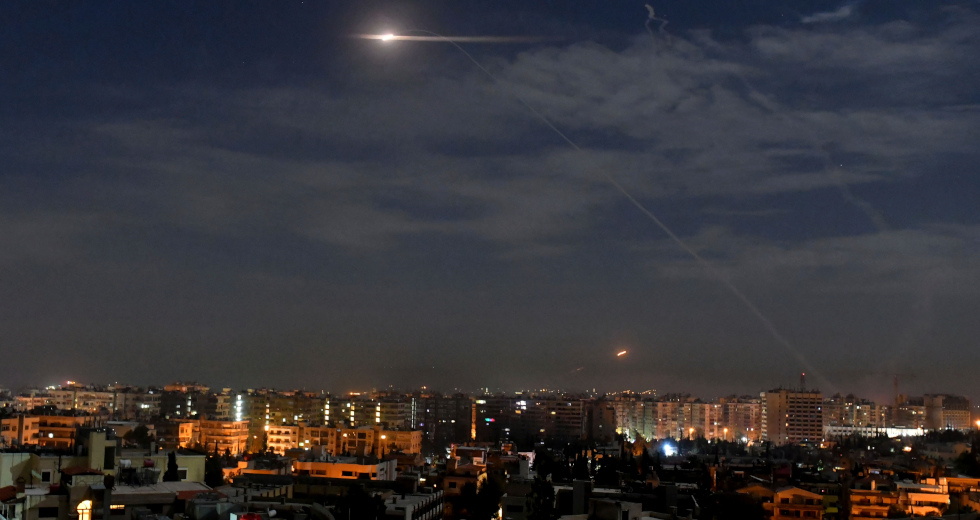
Εδάφη της Συρίας έπληξε το ισραηλινό πυροβολικό μέσα στη νύχτα με τις ένοπλες δυνάμεις να κάνουν λόγο για αντίποινα για τις ρουκέτες που εκτοξεύθηκαν προς το νότιο τμήμα των υψιπέδων του Γκολάν.
«Το πυροβολικό έπληξε την περιοχή της Συρίας από την οποία εκτοξεύτηκαν ρουκέτες προς το ισραηλινό έδαφος», αναφέρει η λακωνική ανακοίνωση του ισραηλινού στρατού.
Μια από τις ρουκέτες «έπεσε σε ένα έρημο μέρος στο νότιο τμήμα των Υψιπέδων του Γκολάν», περιοχή που έχει προσαρτήσει το Ισραήλ, ανέφερε ο στρατός σε σύντομη ανακοίνωση, χωρίς να δώσει περισσότερες λεπτομέρειες.
Εκτοξεύτηκαν συνολικά έξι ρουκέτες, σύμφωνα με την ίδια πηγή, με αποτέλεσμα να ηχήσουν προειδοποιητικές σειρήνες σε διάφορες τοποθεσίες.
Νωρίτερα, το τηλεοπτικό δίκτυο Al Mayadeen είχε μεταδώσει πως οι Ταξιαρχίες Αλ Κουντς (σ.σ. ο ένοπλος βραχίονας της παλαιστινιακής οργάνωσης Ισλαμικός Τζιχάντ) ανέλαβε την ευθύνη για την εκτόξευση ρουκετών προς τα υψίπεδα του Γκολάν.
Τα ξημερώματα της Κυριακής τα κρατικά μέσα ενημέρωσης στη Συρία μετέδωσαν ότι υπήρξαν αναφορές για εκρήξεις στα περίχωρα της πρωτεύουσας Δαμασκού, ενώ δεν έχουν υπάρξει αναφορές για θύματα.
Στην κατεχόμενη Δυτική Όχθη, όπως ανακοίνωσε το παλαιστινιακό υπουργείο Υγείας, ένας νεαρός Παλαιστίνιος σκοτώθηκε από πυρά των ισραηλινών δυνάμεων.
Ο Άχεντ Σαλίμ, 20 ετών, σκοτώθηκε από σφαίρες της (ισραηλινής) “κατοχής” στο στήθος και στην κοιλιά, στην περιοχή Αζούν, κοντά στην πόλη Καλκίγια, κατά τη διάρκεια συμπλοκής μεταξύ στρατιωτών και ομάδας Παλαιστινίων, σύμφωνα με τη σύντομη ανακοίνωση του υπουργείου, στην οποία δεν δίνονται περισσότερα στοιχεία.
Ο ισραηλινός στρατός δεν έχει απαντήσει επί τους παρόντος σε αίτημα να σχολιάσει αυτές τις πληροφορίες.
Υπενθυμίζεται ότι το βράδυ της Παρασκευής, επίθεση με παγιδευμένο αυτοκίνητο στο Τελ Αβίβ στοίχισε τη ζωή σε έναν Ιταλό και προκάλεσε τον τραυματισμό επτά ανθρώπων, σύμφωνα με την ισραηλινή αστυνομία.
Νωρίτερα την Παρασκευή, δύο Ισραηλινοβρετανές αδελφές σκοτώθηκαν σε άλλη παλαιστινιακή επίθεση, στη Δυτική Όχθη, κατεχόμενο από το Ισραήλ παλαιστινιακό έδαφος από το 1967.
Το Ισραήλ είχε πραγματοποιήσει προηγουμένως πλήγματα στοχεύοντας υποδομές του παλαιστινιακού ισλαμιστικού κινήματος Χαμάς στη Λωρίδα της Γάζας και στο νότιο Λίβανο, σε αντίποινα για την εκτόξευση δεκάδων ρουκετών εναντίον του εδάφους του.
Η νέα έξαρση βίας σημειώνεται μετά τη βίαιη εισβολή των ισραηλινών δυνάμεων στο τέμενος Αλ-‘Ακσα στην Ιερουσαλήμ την Τετάρτη, εν μέσω του Ραμαζανιού, η οποία προκάλεσε πλήθος αντιδράσεων και καταδίκη.
Από τις αρχές Ιανουαρίου, η ισραηλινοπαλαιστινιακή σύγκρουση έχει στοιχίσει τη ζωή σε τουλάχιστον 92 Παλαιστίνιους, 18 Ισραηλινούς, μία Ουκρανή και έναν Ιταλό, σύμφωνα με καταμέτρηση του Γαλλικού Πρακτορείου που βασίζεται σε επίσημες ισραηλινές και παλαιστινιακές πηγές.
Τα στοιχεία αυτά περιλαμβάνουν, από την παλαιστινιακή πλευρά, μαχητές και άμαχους, ανάμεσά τους ανήλικοι, και από την ισραηλινή πλευρά, κυρίως άμαχους, ανάμεσά τους ανήλικοι, και τρία μέλη της αραβικής μειονότητας.
The Israeli military said its forces attacked targets in Syria early Sunday after six rockets were launched from Syrian territory in two batches toward Israel in a rare attack from Israel’s northeastern neighbor.
After the second barrage of three rockets, Israel initially said it responded with artillery fire into the area in Syria from where the rockets were fired. Later, the military said Israeli fighter jets attacked Syrian army sites, including a compound of Syria’s 4th Division and radar and artillery posts.
The rocket firings came after days of escalating violence on multiple fronts over tension in Jerusalem and an Israeli police raid on the city’s most sensitive holy site.
In the second barrage, which was launched early Sunday, two of the rockets crossed the border into Israel, with one being intercepted and the second landing in an open area, the Israeli military said. In the first attack, on Saturday, one rocket landed in a field in the Israeli-annexed Golan Heights. Fragments of another destroyed missile fell into Jordanian territory near the Syrian border, Jordan’s military reported.
There were no reports of casualties.
A Damascus-based Palestinian group loyal to the Syrian regime claimed responsibility for launching the three missiles Saturday, reported Beirut-based Al-Mayadeen TV.
The report quoted Al-Quds Brigade, a militia different than the larger Palestinian Islamic Jihad’s armed wing with a similar name, as saying it fired the rockets to retaliate for the police raid on Al-Aqsa Mosque.
In Syria, an adviser to President Bashar Assad described the rocket strikes as “part of the previous, present and continuing response to the brutal enemy.”
Israel, which has vowed to stop Iranian entrenchment in Syria, has carried out hundreds of strikes in government-controlled parts of that country in recent years, though it rarely acknowleges them. Before the latest strikes, Syrian officials had attributed 10 attacks to Israel this year, some of which put the Damascus and Aleppo airports temporarly out of service and killed civilians as well as Syrian soldiers and Iranian military advisers.
In the occupied West Bank, Israeli security forces fatally shot a 20-year-old Palestinian in the town of Azzun, Palestinian health officials said, stirring protests in the area. The Israeli military said troops fired at Palestinians hurling stones and explosive devices. The Palestinian Health Ministry identified the Palestinian killed as Ayed Salim.
His death came at a time of unusually heightened violence in the West Bank. Over 90 Palestinians and have been killed by Israeli fire so far this year, at least half of them affiliated with militant groups, according to a tally by The Associated Press.
Palestinian attacks on Israelis have killed 19 people in that time — including on Friday two British-Israelis shot to death near a settlement in the Jordan Valley and an Italian tourist killed by a suspected car-ramming in Tel Aviv. All but one were civilians.
The rocket fire from Syria comes against the backdrop of soaring Israeli-Palestinian tensions touched off by an Israeli police raid on Jerusalem’s most sensitive site, the sacred compound home to the Al-Aqsa mosque. That outraged Palestinians marking the holy fasting month of Ramadan and prompted militants in Lebanon — as well as Palestinian militants in the Gaza Strip — to fire a heavy barrage of rockets into Israel.
In retaliation, Israeli warplanes struck sites allegedly linked to the Palestinian militant group Hamas in Gaza and southern Lebanon.
Late Saturday, tensions ran high in Jerusalem as a few hundred Palestinian worshippers barricaded themselves in the mosque, which sits on a hilltop in the heart of Jerusalem’s Old City sacred to both Muslims and Jews. Israeli police efforts to evict the worshippers locked in the mosque overnight with stockpiled firecrackers and stones spiraled into unrest in the holy site earlier this week.
The latest escalations prompted Israeli Defense Minister Yoav Gallant to extend a closure barring entrance to Israel for Palestinians from the occupied West Bank and Gaza Strip for the duration of the Jewish holiday of Passover, while police beefed up forces in Jerusalem on the eve of sensitive religious celebrations.
In a separate incident in the northern West Bank city of Nablus late Saturday, a leader of a local independent armed group known as the Lion’s Den claimed the group executed an alleged Israeli collaborator who had tipped off the Israeli military to the locations and movements of the group’s members. Israeli security forces have targeted and killed several of the group’s key members in recent months.
The accused man’s killing could not be immediately confirmed, but videos in Palestinian media showed medics and residents gathered around his bloodied body in the Old City, where the Lion’s Den holds sway. “Traitors have neither a country nor a people,” Lion’s Den commander Oday Azizi said in a statement.
The moves come at a time of heightened religious fervor – with Ramadan coinciding with Passover and Easter celebrations. Jerusalem’s Old City, home to key Jewish, Muslim and Christian holy sites, has been teeming with visitors and religious pilgrims from around the world.
Gallant said that a closure imposed last Wednesday, on the eve of Passover, would remain in effect until the holiday ends on Wednesday night. The order prevents Palestinians from entering Israel for work or to pray in Jerusalem this week, though mass prayers were permitted at the Al-Aqsa Mosque on Friday. Gallant also ordered the Israeli military to be prepared to assist Israeli police. The army later announced that it was deploying additional troops around Jerusalem and in the West Bank.
Over 2,000 police were expected to be deployed in Jerusalem on Sunday – when tens of thousands of Jews are expected to gather at the Western Wall for the special Passover priestly blessing. The Western Wall is the holiest site where Jews can pray and sits next to the Al-Aqsa Mosque compound, where large crowds gather each day for prayers during Ramadan.
Jerusalem police chief Doron Turgeman met with his commanders on Saturday for a security assessment. He accused the Hamas militant group, which rules the Gaza Strip, of trying to incite violence ahead of Sunday’s priestly blessing with false claims that Jews planned to storm the mosque.
“We will allow the freedom of worship and we will allow the arrival of Muslims to pray,” he said, adding that police “will act with determination and sensitivity” to ensure that all faiths can celebrate safely.
The current round of violence erupted earlier in the week after Israeli police raided the mosque, firing tear gas and stun grenades to disperse hundreds of Palestinians who had barricaded themselves inside. Violent scenes from the raid sparked unrest in the contested capital and outrage across the Arab world.
![Ο Καραλής «πέταξε» στα 5,80 μέτρα και κατέκτησε τον 6ο σερί τίτλο του [βίντεο]](https://www.efsyn.gr/wp-content/uploads/2025/08/Karalis-Emanouil-320x213.png)